
The 6,000 Round Test - Truth vs Wives Tales
By Josh Amesbury
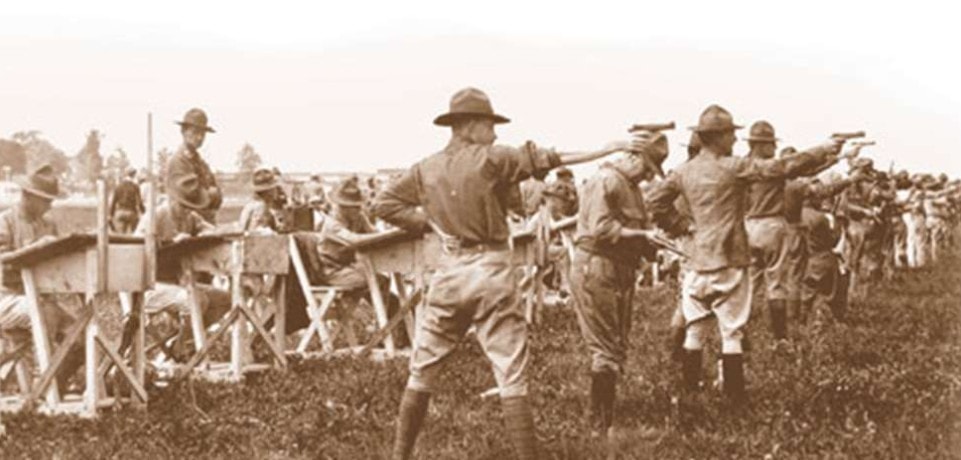
Every old pistol collects stories the way the Bible on most coffee tables collects dust. The Colt 1911 has collected more wives tales and exaggerations than most. It is the sidearm of doughboys and Marines, of detectives in cheap suits and ranchers who never quite trusted a revolver to do everything. It is steel and walnut and a fat .45 hole in the target, and around that silhouette a piece of folklore has hardened like carbon on a neglected chamber: six thousand rounds, one gun, no mercy. In the campfire version, Army testers stacked magazines like cordwood, thumbed the slide off the last round, and simply kept shooting until the smoke hung in the Springfield rafters and the Savage competitor was a bucket of parts. The 1911, so the tale goes, just would not die. That story is good theater. It is also wrong in the only way that matters. Nobody filled a barrel with loaded magazines and staged a carnival burn-down. The test that put the pistol into American service was slower, methodical, and far more rooted in reality. Testers fired one hundred rounds. They stopped. They let the gun cool. In the first trial they even poured water down the barrel. Every thousand rounds they were allowed to clean and oil the pistol. Then they started again. The question was not whether a pistol could be abused without rest. The question was what wore, what cracked, what shook loose, and whether the machine would still run after the kind of hard, interrupted work a soldier's sidearm might actually see. Longevity, in other words, not a magic trick.
The Army had been hunting that kind of proof for years. The .38 revolver had shown its limits in the Philippines, where a cartridge that looked tidy on a target range did not always settle a fight. The service wanted a .45-caliber automatic: enough bullet, a magazine that could be swapped in a hurry, a gun that could be stripped in the field without a watchmaker's kit. Trials dragged from 1907 onward. Designs came and went. By late 1910 the contest had narrowed to two serious machines. One was Colt's improved Model 1910, John Browning's latest tightening of a design he had been worrying over for a decade, the immediate ancestor of the pistol that would be adopted as the Model of 1911. The other was Savage's improved Model H, a lighter, simpler-looking rival with fewer parts and a fierce champion in inventor Elbert Searle. On November 10, 1910, a board at Springfield Armory put both of them on the table and told them to last.
Springfield was not a place for romance. It was a place for measured cruelty. After every hundred rounds the testers stopped and cooled the pistols. Water went through the bore to knock down heat and wash out the grit that burning powder leaves behind. After every thousand rounds the guns could be cleaned and oiled. A Colt Model 1909 revolver ran the same course as a control, the old double-action workhorse standing there like a witness. Accuracy and velocity were taken. Groups were measured. The Colt printed tighter and threw its bullet a little faster. In a combined speed-and-accuracy drill it was quicker and cleaner than the Savage. None of that decided the issue. Endurance would.
Nobody sailed through the first 6,000 rounds. In the first 2,000 the Colt recorded nine malfunctions, and near the end of the second thousand the barrel split and had to be replaced. Around the 3,000-round mark the mechanical thumb safety broke. The pistol, stubborn even then, kept running. By 4,000 rounds the extractor had given up, grip screws were walking out of their holes, the slide lock was failing, and a magazine floor plate failed. Across the full course Colt needed four part replacements. Savage needed thirteen. The Savage list read like a salvage yard: a sear broken off, grip panels split and coming away in a man's hand, a dead extractor, a broken bolt stop, a broken barrel lug, a bolt-lock spring gone, a sear lock gone, a magazine that would not behave. Stoppages stacked up behind the broken parts, especially after the first thousand. The November test did not crown a winner. It peeled both designs open and sent the companies home with a bill of particulars.
That is the chapter the legend likes to skip. People talk as if the 1911 arrived already perfect, a finished cathedral in blued steel. It did not. The November trial was a diagnostic, and a harsh one. The Army wanted to know what failed, where it failed, and whether a machinist and a designer could cut the failure out of the metal. Browning and Colt went after the locking lugs, cutting them less deeply and only where they needed to be, instead of carrying the slots around the barrel as if the whole job could be done on a lathe. They refined the slide and the extractor. They chased the screws and the small parts that had loosened under pounding. Savage made its own changes. The board called them back to Springfield on March 15, 1911. John Browning was there. Searle was there. Company presidents and plant men stood in the noise and watched two pistols try to live.
The second protocol was cousin to the first, not a twin. Testers still fired hundred-round strings. This time the guns cooled for five minutes between strings instead of taking a water bath down the bore. They were still examined, cleaned, and oiled after every thousand rounds. For the first thousand, both pistols ran as if the winter test had been a bad dream. Then the delta between the two began to emerge. At 2,000 rounds the Savage began to stumble. The Colt did not. At 3,000 the Colt was still perfect while Savage started breaking parts, including a bolt stop that had to be replaced. Four thousand, five thousand: same refrain. The Colt ate ammunition and gave nothing back but empty brass. In the last thousand rounds the Savage came apart in earnest—thirty-one malfunctions in that stretch alone. The breech plug cracked. The firing pin took a permanent set, the metal itself surrendering to the hammer's long argument. The safety slide broke. The retractor spring took a set. A new extractor was required. Magazines dumped themselves. The bolt showed cracks. When the smoke cleared, a careful examination of the Colt found no defective parts. Six thousand rounds. No stoppage. No corpse in the parts tray.
The board did not dress the verdict up. On March 20, 1911, it said the Colt was superior because it was more reliable, more enduring, more easily disassembled when broken parts had to be replaced, and more accurate. It recommended that the Colt .45 automatic of the design submitted be adopted for foot and mounted troops, citing its marked superiority to the service revolvers then in use and to any other known pistol, its extreme reliability and endurance, and its fulfillment of essential military requirements. Nine days later the Secretary of War signed the thing into the Army's future. The pistol became the Model of 1911. It would stay in U.S. service, in one official skin or another, for the better part of three-quarters of a century.
What the test measured, and what it refused to measure, still gets scrambled in the retelling. There is no honest fight in which a pistol is asked to fire 6,000 rounds without pause. There is barely a fight that asks it for 1,000 without pause. A hundred-round string already outruns what most soldiers would ever dump from a holstered gun in a single scrape. The endurance trial was a wear test conducted in chapters: heat the steel, let it cool, run it again, and at regular intervals put oil back where oil belongs and look the parts in the face. That is closer to a campaign than a continuous dump. It is also why the 1911 has always been a gun that wants lubrication the way a hinge wants grease. The design was never meant to run dry for long. In the first trial, several of the Colt's early stoppages were blamed on inadequate oiling. The pistol will run dirty longer than it will run thirsty. Owners who treat it like a sealed appliance learn that lesson the hard way.
The first test also showed the ordinary sins modern shooters still meet at the bench. Parts loosen. Screws back out. An extractor can tire and quit. A barrel can split if the locking surfaces are cut too deep, too far around, as if strength were a suggestion. Those are workshop problems, not a curse on the concept. Once the lugs were cut with more respect and the other weak points were chased down, the same basic machine went 6,000 rounds without a hitch. That is the distance between a prototype under torture and a finished service pistol. It is also why "the 1911 is unreliable" and "the 1911 never breaks" are both lazy sentences. The design is simple: not many springs, not a lot of hidden motion, a lockup you can see and feel. Simple is not the same as indifferent. Fit it wrong, starve it of oil, or cut the steel where the steel needs to remain, and it will tell on you. Fit it right and keep it wet, and it has a habit of outlasting the argument.
The metal itself has changed since those March days. The steels and heat treatment of 1911 were honest for their time and primitive by ours. Mineralogy and furnace work have moved. A modern 1911 built to specification—correct lockup, correct springs, parts that actually occupy the dimensions the drawings demand—starts from a tougher material base than the trial guns Browning watched across the firing line. That is why a well-made example routinely outlasts the original endurance number, and why some frames have been documented well past 100,000 rounds on a single set of bones. Age by itself does not decide the question. Calendar years do not crack slides. Fit, lubrication, and whether the pistol was built like the pistol, rather than like a costume of one, decide the question. If it works, it works. The date on the frame is gossip.
So the reputation was never a carnival stunt. It was a government board that made two companies prove, in measured strings, what broke and what did not. The first 6,000 rounds were a confession. The second 6,000 were a correction. The Army adopted the Colt because, after that cycle of failure and file work, it was the more reliable and more enduring gun on the table—easier to take down when something finally did give, tighter on the target, still running when the other machine was leaving pieces behind. That is a harder claim than the myth of a single unstoppable roar, and a more useful one. A 1911 lasts when it is built right and kept shining with oil. The trials at Springfield were designed to find out whether that was true. In March of 1911, with Browning in the room and six thousand spent cases on the ground, it was.
Watch the video
This article is also covered on the Old Path Traveller YouTube channel.
Watch on YouTube →← Back to Blog